Are you wondering about the requirements for studying medicine in Turkey?
If you are looking for an opportunity to study medicine in Turkey, it is important to understand the conditions that must be met to ensure acceptance into a Turkish university. Turkey is a preferred destination for international students due to its advanced educational system and the variety of universities offering medical programs in either Turkish or English.
Whether you are aiming for public or private universities, there are specific requirements to be met, which may vary depending on the type of university, as well as preparing the necessary documents accurately to guarantee your acceptance.
In this article, we will cover all the details you need to know about studying medicine in Turkey, from admission requirements to the best universities and costs. Keep reading to discover how you can start your academic journey in this vital field.
Advantages of Studying Medicine in Turkey
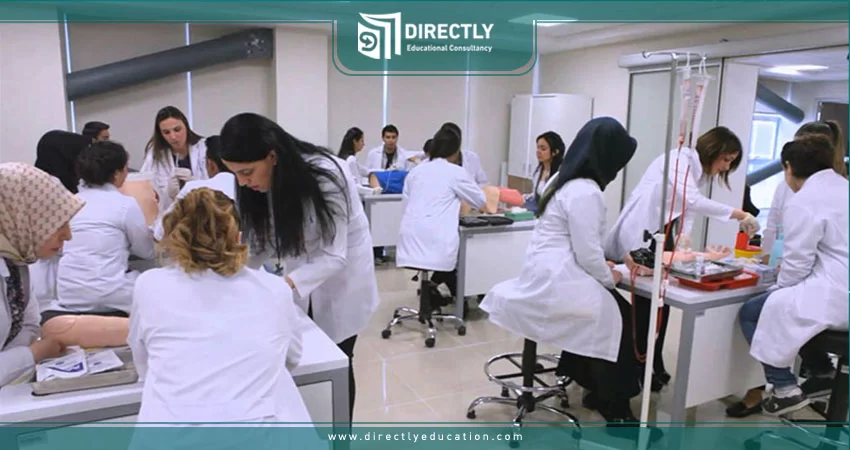
Studying medicine in Turkey offers an ideal blend of strong academic foundations and extensive clinical training, supported by advanced hospitals and internationally recognized universities. It is one of the most competitive and rewarding pathways for international students seeking quality education at reasonable costs.
- High-quality medical curricula aligned with international standards
- Advanced training hospitals and laboratories
- English and Turkish study options
- Internationally recognized medical degrees
- Affordable tuition compared to Europe and the USA
- Strong practical training in real clinical environments
- Diverse multicultural student community
- Opportunities for research and medical innovation
- Modern campuses and high-tech medical facilities
- Pathways for specialization and postgraduate studies in Turkey
Requirements to Study Medicine in Turkey for International Students
Private Turkish universities are an ideal choice for students aspiring to study medicine without the complex admission procedures required by public universities. However, despite the simpler process, there are still criteria that must be met to ensure acceptance. Here are the basic requirements:
- Obtaining a high school diploma with a minimum grade of 70%.
- Completing the required official documents, such as a passport and translated certificates.
- Passing an interview at some universities.
- Providing proof of language proficiency (either English or Turkish), or enrolling in a preparatory year.
- Paying the tuition fees determined by the university and program.
Also read: Ranking of the Best Medical Universities in Turkey (in Turkish and English), Public and Private.

Advantages of Studying Medicine at Private Turkish Universities
Private Turkish universities offer a distinctive educational environment, making them an attractive destination for international students wishing to study medicine. They combine high academic quality with convenient facilities. Here are the main advantages that make studying medicine at these universities a preferred option:
- Easier admission procedures compared to public universities.
- The possibility of studying in English at most universities.
- Partnerships with international hospitals and medical centers.
- Availability of partial scholarships to ease financial burdens.
- International accreditation in many European and Arab countries.
- Use of the latest technologies and advanced medical curricula.
- Practical training opportunities in large Turkish hospitals.
- A multicultural international community that fosters exchange of experiences and knowledge.
Best Private Turkish Universities for Studying Medicine
Private Turkish universities have a high reputation in medical education, offering advanced academic programs and exceptional training environments. If you are looking for the best private universities to study medicine in Turkey, here is a list of the top institutions:
- Koç University
- Bahçeşehir University
- Medeniyet University
- Istinye University
- Al-Biruni University
- Altınbaş University
- Istanbul Aydın University
- Üsküdar University
These universities offer programs that combine theoretical education with practical training in advanced hospitals, ensuring students acquire the skills needed to excel in the international job market.
Also read: Medical Specializations in Turkey, Their Advantages, Costs, and Admission Rates.
Study Medicine in Turkey for International Students Fees
Tuition fees range between $15,000 and $33,700 per year, depending on the university, study program, language of instruction, and academic level — with exclusive Directly discounts applied whenever available.
Also read: Costs of Studying Medicine in Turkey at Private Universities
Conditions for Studying Medicine at Turkish Public Universities
Turkish public universities enjoy a strong global academic reputation, making them a preferred destination for students seeking high-quality medical education at affordable prices. However, admission to these institutions requires meeting specific conditions due to the intense competition.
Here are the key requirements for enrolling in a medical program at Turkish public universities:
- Achieving a minimum of 90% in the high school diploma.
- Passing the YÖS (Foreign Student Exam) with a high score, or obtaining a high score on the SAT.
- Providing proof of proficiency in Turkish (TÖMER) or English, depending on the language of instruction.
- Applying through the university’s specific selection system.
- Meeting the university’s additional admission requirements, which may include personal interviews or additional tests.
Required Documents for Studying Medicine in Turkey
The required documents for studying medicine in Turkey include a set of essential documents that international students must prepare to ensure a successful application process. With its advanced education system, Turkey attracts thousands of students annually, making the accurate preparation of these documents a crucial step towards realizing the dream of studying medicine. Here is a list of the key documents:
- Translated and notarized high school diploma.
- Translated and notarized high school transcript.
- Valid passport.
- Recent passport-sized photos.
- University acceptance letter.
- Language proficiency certificate (Turkish or English) or enrollment in a preparatory year.
- Proof of payment for tuition fees or the first installment.
Requirements for Studying a Master’s in Medicine in Turkey
Turkey is an excellent destination for students seeking to pursue advanced studies in the field of medicine, offering leading master’s programs with a modern and advanced educational environment. If you are looking to join a Master’s program in Medicine in Turkey, here are the key requirements:
- A Bachelor’s degree in a medical field from an accredited university.
- A language proficiency certificate (Turkish or English) depending on the language of the program.
- Preparation of official documents such as your CV and Bachelor’s degree certificate.
- Passing a personal interview, which may be required by some universities.
- Obtaining an acceptance letter from a Turkish university.

How We Can Help You Secure Discounts for Medical Universities in Turkey through Directly?
Here are How We Can Help You Secure Discounts for Medical Universities in Turkey through Directly:
- Discounts of up to 80% on fees at private universities.
- Direct collaboration with universities to ensure exclusive discounts.
- Quick and smooth registration process.
- Saving time and effort to successfully start your academic journey.
Don’t miss the opportunity to receive discounts of up to 80% for studying medicine at the best Turkish universities. Contact us via Directly for a free consultation tailored to your academic needs.
In conclusion, studying medicine in Turkey is an invaluable opportunity, combining high-quality education with affordable costs, and offering practical training opportunities at renowned medical institutions.
If you aspire to join the ranks of successful professionals in this field, your first step starts here. Contact us now via WhatsApp on Directly for a free consultation and learn how to secure your acceptance into the best Turkish universities at the lowest costs!