Studying Medicine in Turkey is not just a career choice; it’s a journey filled with both challenges and opportunities. It requires careful preparation and a smart academic path. As more international students consider studying medicine in Turkey, they must face several obstacles such as tuition costs, language barriers, and international recognition of degrees.
These challenges, while demanding, can turn into valuable opportunities if you know how to navigate them with confidence and informed decisions. In this article by Directly, we’ll guide you through everything you need to know to take your first step toward this promising future. Keep reading to discover practical solutions that will open the doors to success in studying medicine in Turkey.
Advantages of Studying Medicine in Turkey
Studying medicine in Turkey offers a unique balance between high academic standards and international opportunities. It has become a top destination for students seeking quality medical education at reasonable costs.
- Internationally recognized medical degrees
- Affordable tuition fees compared to Europe and the USA
- Modern universities with advanced hospitals and laboratories
- Programs available in English and Turkish
- Strong practical training and early clinical exposure
- Multicultural student environment
- High-quality education aligned with global standards
- Wide opportunities for residency and specialization
- Strategic location connecting Europe and Asia
Admission Requirements for Studying Medicine in Turkey
Gaining admission to medical schools in Turkey can be a major challenge for many students. Public universities usually require very high high school grades—often no less than 90%—to be eligible for studying medicine in Turkey.
In contrast, private universities offer more flexibility, with admission starting from as low as 60%, giving students a greater opportunity to pursue medical studies.
You can overcome this challenge by focusing on academic excellence during high school, especially in science subjects.
Another effective approach is to consider private universities that have more flexible entry requirements. Additionally, taking part in foundation programs or pre-med courses can significantly boost your chances of success in studying medicine in Turkey.
Read also: What are the requirements for studying medicine in Turkey?
Intense Competition for Medical Schools in Turkey
Due to the high quality of medical education, studying medicine in Turkey has become highly competitive—especially at public universities. Medical programs attract a large number of both international and local students, making it essential to stand out academically to secure a seat.
To succeed, students should focus on academic excellence through dedicated study and by taking advantage of additional opportunities to improve their skills, such as participating in academic and research activities. It’s also crucial to apply to multiple universities to broaden your options and increase your chances of acceptance into a studying medicine in Turkey program.
Read More: The acceptance rate for medicine in Turkey
Cost of Studying Medicine in Turkey
The cost of studying medicine in Turkey depends mainly on the type of university. Public universities remain the most affordable option, with annual tuition fees now ranging between $1,000 and $4,000, but admission is highly competitive and requires very high academic scores.
In contrast, private universities charge higher tuition fees, which currently range between $12,000 and $30,000 per year, depending on the university, language of instruction, and available facilities. However, private universities offer more flexible admission requirements, English-taught programs, and a smoother application process.
To manage these costs effectively, students are encouraged to apply for scholarships and tuition discounts offered by universities and educational agencies. Careful financial planning and choosing the right institution can make studying medicine in Turkey a high-value investment with strong academic and career returns.
Read also: Cost of Studying Medicine in Turkey in English
Language of Instruction for Studying Medicine in Turkey
Turkish universities offer medical programs in both English and Turkish. If you choose to study in Turkish, you’ll need language proficiency or be required to complete a preparatory year. Many private universities offer the option of studying medicine in Turkey in English, especially in popular medical disciplines.
To overcome this challenge, students can enroll in a preparatory year to learn Turkish or select a program taught entirely in English. Additionally, it’s highly recommended to practice the language daily outside the classroom by engaging with the local community or using language-learning apps. This will ease your academic journey while studying medicine in Turkey.
Study Hours in Turkish Medical Schools
Studying medicine in Turkey is highly intensive. Medical programs typically span six years and include long hours of theoretical lectures combined with extensive hands-on training in university hospitals. This demanding schedule is designed to fully prepare students for the realities of the medical profession.
Effective time management is crucial to keep up with the academic workload. Creating and sticking to a structured study schedule can help organize daily tasks. Students can also benefit from efficient study methods such as group learning sessions and time management apps. Taking regular breaks and seeking academic support when needed can also ease the pressure of studying medicine in Turkey.
Read also: Advantages of Studying Medicine in Turkey in Detail for International Students
Practical Training and Clinical Rotations
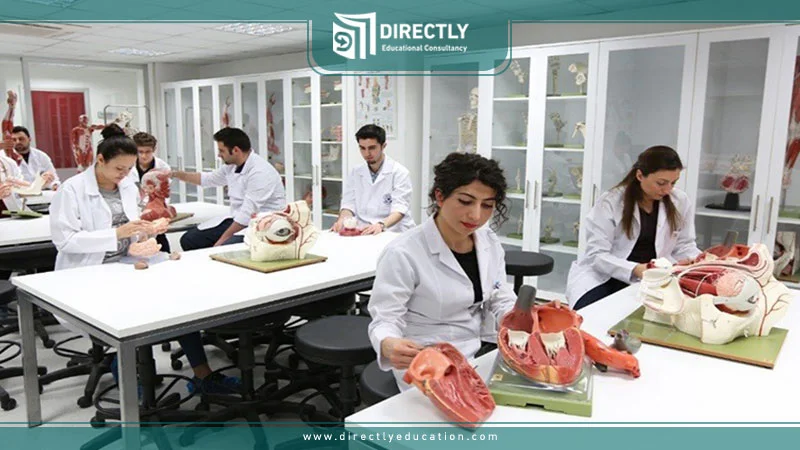
Practical training is a fundamental part of studying medicine in Turkey. Students receive hands-on experience in university hospitals equipped with the latest medical technology, providing a unique opportunity to manage real medical cases under the supervision of experienced specialists.
It is recommended to enhance practical skills through additional summer internships and volunteering in hospitals or clinics before starting formal training. Maintaining continuous communication with supervisors and trainers to benefit from their expertise will also help students improve their performance and build confidence when handling diverse medical cases during studying medicine in Turkey.
Read also: 10 Essential Tips before Studying Medicine in Turkey
Job and Training Opportunities for Medical Graduates from Turkish Universities
Graduates of medical programs from Turkish universities enjoy wide-ranging job and training opportunities both within Turkey and internationally. Many Turkish hospitals offer advanced training programs for graduates, helping them enhance their skills and secure excellent career prospects.
It is advisable to prepare early for the job market by building a professional network with professors and doctors in university hospitals, and by participating in medical conferences and workshops. Additionally, students can benefit from advanced training programs provided by universities and hospitals to boost their employment opportunities after studying medicine in Turkey.
Read also: Costs of Studying Medicine in Turkey: Benefits and How to Apply
International Recognition of Medical Degrees from Turkey
Medical degrees from Turkish universities are internationally recognized in many countries, including those in the European Union and the Arab world. This recognition provides graduates with broad opportunities to work around the globe.
Students should verify that the universities they plan to attend are accredited by the medical authorities in the country where they intend to practice after graduation. Additionally, contacting embassies or educational bodies can help clarify the requirements for degree equivalency or enrollment in professional qualification programs in their home countries, ensuring a smooth transition after studying medicine in Turkey.
You can learn more about studying medicine in Turkey: Studying Medicine in Turkey: Is It Internationally Recognized? A Guide for Aspiring International Students
Integration with Turkish Culture and Society
International students who choose studying medicine in Turkey benefit from a unique experience of integrating into Turkish society. Despite language and cultural challenges, the vibrant student life and multicultural environment make adapting and blending in much easier.
Students can improve their integration by participating in student activities and joining cultural and social clubs. Learning basic Turkish will also enhance everyday communication. Additionally, it is advisable to familiarize themselves with local customs and traditions and take advantage of the multicultural university environment to build new relationships during studying medicine in Turkey.
Read also: Advantages of Studying Medicine in Turkey in Detail for International Students
Adapting to the Different Medical Education System
One of the major challenges international students face when studying medicine in Turkey is adapting to a medical education system that differs from those in their home countries. The Turkish system is known for its intensive approach, combining theoretical and practical learning from the early stages of study. Additionally, some universities may use different assessment methods such as continuous exams or fieldwork, which might be unfamiliar to some students.
It is recommended to thoroughly understand the education system of Turkish universities before starting your studies. Communicating with professors and current students can provide a clearer picture of the curriculum and evaluation methods. Moreover, actively engaging with available educational resources—such as university libraries and digital materials—is crucial for success while studying medicine in Turkey.
What Are the Best Turkish Universities for Studying Medicine?
Turkey is a prominent destination for studying medicine in Turkey, offering universities that provide an exceptional educational environment combining academic excellence with advanced practical training. Turkish medical schools have a global reputation for delivering innovative medical programs that blend theoretical knowledge with hands-on training in top hospitals.
These universities focus on preparing students to face global medical challenges by using the latest technologies and the best academic curricula. Moreover, medical degrees from Turkish universities are internationally recognized, opening wide career opportunities for graduates worldwide.
Here is a list of some of the best Turkish universities for studying medicine:
- Istanbul Aydın University
- Biruni University
- Istinye University
- Bahçeşehir University
- Nişantaşı University
- Istanbul Atlas University
- Altınbaş University
These universities offer comprehensive programs combining theoretical education and clinical training in leading hospitals, making them preferred choices for students aiming for a successful medical career.
Read also: Tuition Fees for Studying Medicine in Turkish Universities for 2026 – 2027

Cost of Studying Medicine at Private Universities in Turkey
The cost of studying medicine at private universities in Turkey ranges between $5,000 and $27,000 per year, taking into account Directly’s exclusive discounts. Tuition fees vary based on the medical program, language of instruction, academic level, chosen university, and whether the program includes a thesis or not.
Thanks to Directly’s partnerships with Turkish universities, students can benefit from significant fee reductions, making private medical education in Turkey more accessible while maintaining high academic standards.

Directly with You Step by Step to Overcome Your Challenges in Studying Medicine in Turkey
Directly supports you step by step to overcome the challenges of studying medicine in Turkey:
- Free university consultation
- Choosing the right specialization
- Securing university admission
- Enrollment services
- Student accommodation
- Student services support
Contact us now via Directly WhatsApp to get a free consultation that guarantees a successful start to your medical journey!
In Conclusion, The journey towards studying medicine in Turkey may seem full of challenges, but it undoubtedly holds priceless opportunities. Every step you plan today could be the cornerstone of your successful professional future as a doctor. Instead of letting these challenges become obstacles, turn them into motivation that drives you toward excellence. Remember, proper planning and reliable consultation are the keys to success.
We are here to support you at every step—whether you need advice on applications or details about universities. Don’t hesitate to contact us via Directly’s WhatsApp. Let us help you achieve your academic and professional dreams!