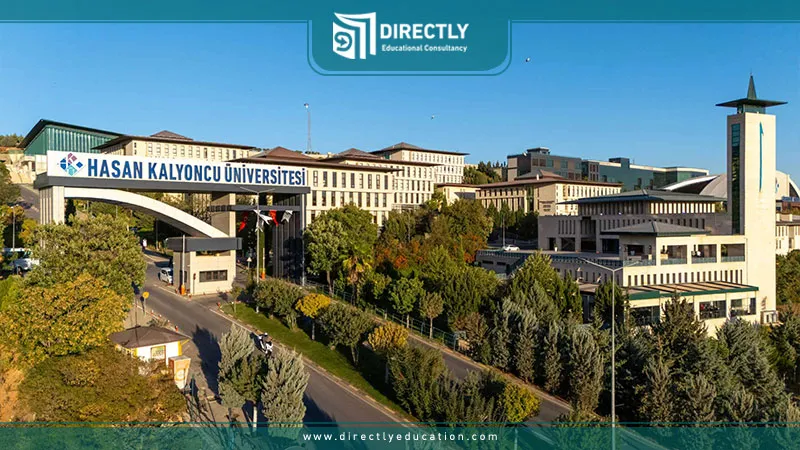
Visual content production is no longer limited to television screens or movie theaters. Digital platforms, production companies, and advertising agencies have opened broader career opportunities for media graduates, requiring technical knowledge and a real ability to create images, sound, and stories. The Radio, Television and Cinema program at Hasan Kalyoncu University combines communication and cinema studies with photography, screenwriting, directing, editing, and radio and television production.
If you are considering studying Radio, Television and Cinema at Hasan Kalyoncu University in 2026, this Directly guide explains the language and duration of study, courses, practical training, tuition fees, admission requirements, required documents, and career opportunities after graduation.
You can contact the Directly team to review your application file and learn the application details that best suit your profile.
About Radio, Television and Cinema at HKU
The Radio, Television and Cinema program within the Faculty of Communication at Hasan Kalyoncu University began in the 2018–2019 academic year. It focuses on preparing students to understand visual and audio media from both theoretical and practical perspectives.
Students study cinema, television, and radio alongside writing, image, sound, production, and directing. Throughout the program, they work on projects and practical applications that help them transform ideas into media content that can be produced. The curriculum also covers the history of cinema and television, communication theories, and visual culture, providing graduates with both professional and cultural knowledge that supports their careers in media and production.
Why Study Radio, Television and Cinema at HKU?
The study experience in this program focuses on production and practical work alongside theoretical courses. This is an important point to consider when comparing Radio, Television and Cinema programs in Turkey across different universities.
Students do not only study media history or theory. The curriculum also includes practical work related to photography, editing, screenwriting, directing, radio, and filmmaking.
Key reasons to study this program at Hasan Kalyoncu University include:
- Practical courses in photography, design, visual storytelling, and editing.
- Study of screenwriting, directing, and cinematography within the academic curriculum.
- Learning how to produce radio and television programs, films, and documentaries.
- A graduation project extending across the final two semesters of the program.
- Modern courses related to new media and artificial intelligence.
- Mandatory practical training both inside and outside the university.
- Opportunities to produce student projects and participate in events, competitions, and festivals.
- Diverse career paths across cinema, television, radio, digital media, and advertising production.
Practical training in Radio, Television and Cinema at Hasan Kalyoncu University is a clear part of the program. Students complete two mandatory internships totaling 48 working days, with 24 working days for each internship.
Possible internship providers include production companies, advertising agencies, media organizations, radio and television stations, and other institutions approved by the faculty.
Read also: Required Documents for Hasan Kalyoncu University 2026
Program Duration and Language at HKU
The Radio, Television and Cinema program at Hasan Kalyoncu University lasts four academic years divided into eight semesters. Students complete 240 ECTS credits in addition to the mandatory internship requirements.
The language of instruction for Radio, Television and Cinema at Hasan Kalyoncu University is Turkish. The program page states that the preparatory year is optional.
The curriculum progresses from the fundamentals of communication, visual media, and design to more specialized courses in production, directing, screenwriting, editing, and radio and television programming. Students complete their studies with a graduation project extending through the fourth year, giving them an opportunity to apply the skills developed throughout the program.
Radio, Television and Cinema Curriculum
The Radio, Television and Cinema curriculum at Hasan Kalyoncu University shows a clear balance between communication studies and practical media production. Students begin with courses that help them understand visual media, communication, and the history of cinema and television, then progress to more specialized production skills. The curriculum concludes with comprehensive projects in visual and audio media.
Key Radio, Television and Cinema courses published in the Hasan Kalyoncu University curriculum include:
- Introduction to Communication Sciences.
- History of World Cinema and Television.
- History of Turkish Cinema and Television.
- Fundamentals of Radio, Television and Cinema.
- Reading the Image.
- Basic and Digital Photography.
- Visual Culture.
- Creative Writing.
- Visual Storytelling.
- Communication Theories.
- Film Theories.
- Editing.
- Cinematography.
- Screenwriting.
- Radio Programming.
- News Gathering and Writing.
- Film Production and Directing.
- Television Journalism.
- Documentary Film Production and Directing.
- Media Ethics.
- Communication Law.
- Media Management and Entrepreneurship.
- New Media Technologies and Artificial Intelligence.
- Graduation Project.
Some courses include practical hours within the course itself. Photography, editing, directing, documentary production, and visual storytelling are therefore not limited to theoretical instruction.
This practical component is important for students looking for a program that helps them build production experience during their studies.
Read also: Hasan Kalyoncu University Accreditations and Recognition in Turkey and Abroad
Radio, Television and Cinema Tuition Fees 2026
According to the currently available tuition data, Radio, Television and Cinema tuition fees at Hasan Kalyoncu University for international students are $4,500 per year.
Since the program lasts four years, the total cost of studying Radio, Television and Cinema at Hasan Kalyoncu University is approximately $18,000 based on the current annual fee, excluding accommodation, living costs, and personal expenses.
Students should rely on the final amount stated in their admission letter or university invoice at registration, as tuition fees and scholarships may change between admission periods.
| Study Information | Details |
| Program | Radio, Television and Cinema |
| Degree | Bachelor’s Degree |
| Language of Instruction | Turkish |
| Duration | 4 years |
| Current Annual Tuition Fee | $4,500 |
| 4-Year Cost at Current Rate | Around $18,000 |
| Accommodation and Living Costs | Not included in tuition fees |
You can contact the Directly team to learn about Radio, Television and Cinema tuition fees at Hasan Kalyoncu University in 2026 and the scholarships or discounts available when you submit your application.
Admission Requirements for Radio, TV and Cinema
The university has announced its international student admission requirements for the 2026–2027 academic year. Radio, Television and Cinema is among the programs available within the Faculty of Communication, with 10 seats allocated to international students.
Applicants must have completed high school, prepare their academic documents, and meet the examination and language requirements applied by the university.
Admission requirements for Radio, Television and Cinema at Hasan Kalyoncu University include:
- A high school diploma or official graduation certificate.
- A high school transcript.
- A TR-YÖS score of at least 200 out of 500 or an SAT total score of at least 1000 out of 1600, including at least 500 out of 800 in Mathematics, according to the current international admission guide.
- Proof of Turkish language proficiency for the Turkish-taught program according to university requirements.
- Completion of the application and submission of all required documents within the period specified by the university.
For students searching for a fixed high school admission average for Radio, Television and Cinema at Hasan Kalyoncu University, the current international admission guide does not list a separate fixed percentage specifically for this department.
Instead, the guide specifies accepted examination scores and application requirements, after which the university evaluates applications according to its criteria and the number of available seats.
Send your file to the Directly team so we can verify that you meet the admission requirements before starting your Radio, Television and Cinema application at Hasan Kalyoncu University.
Read also: Hasan Kalyoncu University Programs and Admission Requirements

Admission and Registration Documents
International students should prepare clear copies of their documents before submitting the application so the university can review their file without missing information. The 2026–2027 admission guide lists the basic documents required for the online application.
Admission documents for Radio, Television and Cinema at Hasan Kalyoncu University include:
- A copy of a valid passport.
- A temporary identity document for Syrian students when used instead of a passport according to university instructions.
- High school diploma or official graduation certificate.
- Official transcript for all years of high school.
- Recent biometric photograph.
- TÖMER Turkish language certificate, when available or when required to prove proficiency.
- A TR-YÖS or SAT result accepted by the university.
After preparing the documents, students upload them to the university’s online application system and wait for the university to review the file.
After receiving admission, students follow the payment and final registration instructions according to the deadlines stated in the admission letter.
Career Opportunities for Graduates
Career opportunities in Radio, Television and Cinema cover all stages of content production, from developing the idea and writing the script to filming, production, editing, and publishing.
The university states that the program prepares students for areas including directing, production, cinematography, screenwriting, editing, radio, and film criticism.
Key career opportunities for Radio, Television and Cinema graduates at Hasan Kalyoncu University include:
- Film or visual content director.
- Assistant director.
- Media producer.
- Screenwriter.
- Director of photography.
- Videographer.
- Video editor.
- Television program producer.
- Radio program producer or presenter.
- Documentary filmmaker.
- Television journalist.
- Film and television critic.
- Digital content creator.
- Working in media production companies.
- Working in advertising agencies.
- Working in television and radio channels.
- Working in news agencies and online publishing platforms.
The future of Radio, Television and Cinema in Turkey is also connected to the continued growth of video production, digital platforms, advertising, television, and cinema.
Skills such as filming, editing, screenwriting, production management, and digital content creation therefore become important when building a professional career after graduation.
Read also: Mechanical Engineering at HKU: Everything You Need to Know
Apply to Hasan Kalyoncu University with Directly
If you would like to study Radio, Television and Cinema at Hasan Kalyoncu University as an international student, you can start your application with the Directly team and follow the admission process step by step.
We review your documents before submitting the application and help you understand the current tuition fees and registration requirements so that you can begin the application process with clear information.
Directly support includes:
- Reviewing the admission requirements for the program.
- Checking your high school diploma, transcript, and other documents.
- Explaining the tuition fees and scholarships available at the time of application.
- Assisting with the admission application.
- Following up on the application result.
- Explaining payment steps after admission is issued.
- Following the final registration procedures with the student.
Contact the Directly team now to learn about the tuition fees and scholarships for Radio, Television and Cinema at Hasan Kalyoncu University and start your application for the 2026–2027 academic year.