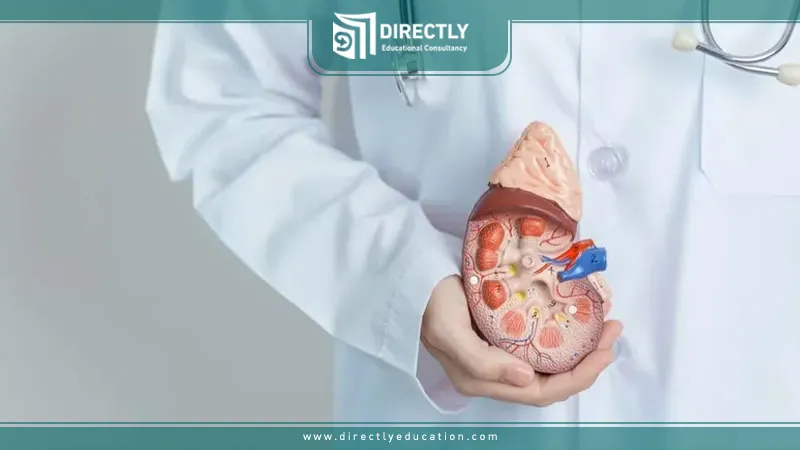
Dialysis is a healthcare field that requires precise knowledge of medical equipment, the patient’s condition, kidney functions, and treatment monitoring before, during, and after each session. The Dialysis program at Hasan Kalyoncu University is a two-year associate degree that combines medical courses with laboratory work and clinical training inside dialysis units.
In this Directly guide, we explain what students study, the difference between hemodialysis and peritoneal dialysis within the curriculum, admission requirements, tuition fees, practical training, and career opportunities after graduation. If you are considering studying Dialysis in Turkey, contact us to review your profile before registration.
What Do You Study in the Dialysis Program at Hasan Kalyoncu University?
The Diyaliz program at Hasan Kalyoncu University focuses on preparing Dialysis Technicians who are able to work with patients and dialysis equipment as part of a healthcare team.
Students begin with foundation courses such as Anatomy, Physiology, and Patient Care, then move on to Kidney Diseases, Dialysis Equipment Operation, Dialysis Therapy, and its complications.
The program is a two-year associate degree consisting of 4 academic semesters and 120 ECTS credits, and the language of instruction is Turkish.
Some of the main Dialysis courses at Hasan Kalyoncu University include:
| Course | What Does the Student Learn? |
| Anatomy | Structure of the human body and its major systems |
| Physiology | Functions of body systems and their relationship to health |
| Principles of Patient Care | Vital signs, medications, fluids, blood collection, and patient care |
| Sterilization and Disinfection | Infection control principles and equipment hygiene |
| Principles of Nutrition | Healthy nutrition and nutrition for kidney and dialysis patients |
| Kidney Diseases | Acute and chronic kidney failure and related treatments |
| Use of Dialysis Equipment | Operating, preparing, and handling dialysis machines and components |
| Dialysis I | Hemodialysis, peritoneal dialysis, and patient monitoring |
| Infectious Diseases | Infections and prevention methods in healthcare environments |
| Pharmacology | Fundamentals of medications, their effects, and interactions |
| Dialysis II | Advanced cases and intensive clinical practice |
| Mental Health of Dialysis Patients | Psychological and social aspects associated with dialysis treatment |
The curriculum places significant emphasis on specialized courses during the second year. Dialysis I includes 4 theoretical hours and 8 practical hours per week, while Dialysis II in the final semester includes up to 16 practical hours per week.
Read also: Hasan Kalyoncu University Master’s for International Students: Admission and Costs
Do Students Study Both Hemodialysis and Peritoneal Dialysis?
Yes. The Dialysis curriculum at Hasan Kalyoncu University includes both Hemodialysis and Peritoneal Dialysis.
Students study the principles of hemodialysis, diffusion and ultrafiltration, temporary and permanent catheters, arteriovenous fistulas, vascular grafts, and patient monitoring during dialysis sessions.
They also learn about acute and chronic peritoneal dialysis and its different methods, including CAPD, CCPD, and NIPD, as well as patient monitoring and complications such as peritonitis.
The program is not limited to operating dialysis machines. It also covers:
- Preparing the dialysis machine and its components.
- Water purification systems and dialysis solutions.
- Selecting the appropriate machine according to the patient’s condition and treatment method.
- Handling peritoneal dialysis equipment and catheters.
- Monitoring laboratory results for hemodialysis patients.
- Acute and chronic complications of dialysis.
- Anemia and high blood pressure in kidney patients.
- Kidney transplantation as part of kidney disease and renal replacement therapy topics.
The program also covers kidney transplantation alongside hemodialysis and peritoneal dialysis, helping students understand the different treatment options available to patients with kidney failure.
Is the Dialysis Program at Hasan Kalyoncu University Practical?
Yes. Practical training has a clear and important role in the program.
During the first year, students train in university laboratories using equipment and models before moving into clinical environments. After completing the first year, students must also complete a 30-working-day summer internship.
Practical training increases during the second year:
- In the third semester, students participate in field training in dialysis clinics one day per week.
- Practical training takes place in dialysis units at hospitals in Gaziantep under university training agreements.
- The fourth semester is dedicated to intensive professional training in hospital clinics and private dialysis centers.
- Students participate in field practice throughout working days during the final semester according to the announced training plan.
This gradual progression is important because Dialysis Technicians work directly with therapeutic equipment and patients who require careful monitoring throughout the dialysis session.
Read also: Why Choose to Study at Hasan Kalyoncu University?
Dialysis Admission Requirements for International Students
The Dialysis program at Hasan Kalyoncu University is available to international students for the 2026–2027 admission cycle, with 10 international student places allocated to the program.
Students must meet the university’s international admission regulations and upload their application files electronically within the application period.
The main application requirements include:
- Holding a high school diploma or being in the final year of high school.
- Meeting the eligibility requirements for international student admission.
- A valid passport.
- High school diploma and transcript.
- A recent biometric photograph.
- Turkish language proficiency certificate, if available.
- Uploading all required documents through the online application system.
- Preparing the original documents and required translations for final registration.
The university also lists TR-YÖS with a minimum score of 200 out of 500, or SAT with at least 1000 out of 1600, including 500 out of 800 in Mathematics, among the accepted examinations in the 2026–2027 International Admission Guide.
Because the language of the Dialysis program at Hasan Kalyoncu University is Turkish, students must prove the required proficiency level or attend language preparation until they reach the level required to begin their studies.
Read also: Hasan Kalyoncu University Programs and Admission Requirements
Dialysis Tuition Fees at Hasan Kalyoncu University 2026
Annual tuition for Vocational School programs is TRY 480,000 under the standard tuition category, while the fee is TRY 360,000 under the 25% discount category.
| Tuition Category | Annual Tuition 2026–2027 |
| Standard Tuition | TRY 480,000 |
| 25% Discount | TRY 360,000 |
| 100% Scholarship | No tuition fees |
Career Opportunities for Dialysis Graduates
Graduates receive the qualification of Dialysis Technician.
Their work is related to preparing dialysis machines, monitoring patients during treatment sessions, maintaining and sterilizing equipment, and working according to the instructions of physicians and the healthcare team.
Turkish healthcare regulations classify Dialysis Technicians among technical healthcare professions. Their responsibilities include preparing dialysis machines for each patient, maintaining equipment readiness, and carrying out disinfection and sterilization procedures.
Career opportunities for Dialysis graduates include:
- Dialysis units in hospitals.
- Private dialysis centers.
- Kidney failure treatment units.
- Licensed healthcare institutions that provide dialysis services.
The university states that graduates can work in dialysis departments at public hospitals and private dialysis centers.
International students seeking employment in Turkey must also meet the applicable employment and professional licensing requirements for foreign nationals and healthcare professions.
Read also: Justice and Law at Hasan Kalyoncu University and Career Opportunities After Graduation
Apply for the Dialysis Program at Hasan Kalyoncu University Through Directly
Choosing the Dialysis associate degree at Hasan Kalyoncu University requires reviewing your high school qualification, language of instruction, tuition fees, and admission requirements before submitting your application.
At Directly, we help you prepare your file and follow the registration steps according to the current admission cycle.
- We review your high school diploma and transcript.
- We check your eligibility to apply as an international student.
- We explain the Turkish language requirements.
- We review your documents before uploading the university application.
- We explain the tuition fees and scholarship stated in your admission offer.
- We follow the admission and final registration procedures with you.
Contact the Directly team via WhatsApp now and send us your nationality, high school diploma, and transcript.
We will review your profile and explain the steps for applying to the Dialysis program at Hasan Kalyoncu University.